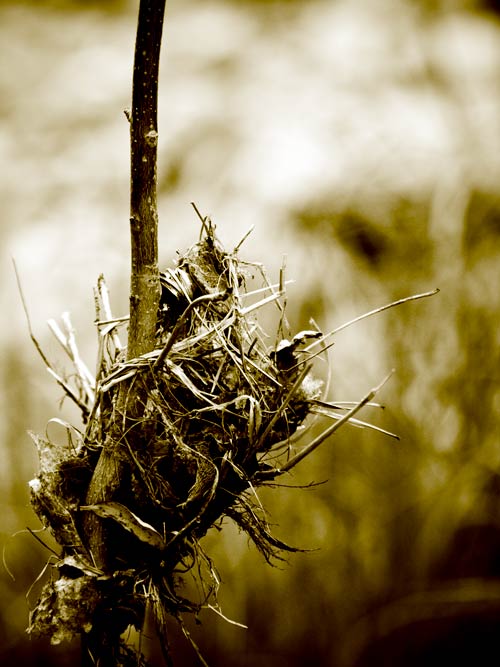
An Examination of the Infamous Frozen Hand

Winter has fallen quickly on the City and the Park. I hate it so. My research subjects shrivel up and die, or hide deep within the soil. I have nothing to capture, and so I spend my time reading in my laboratory, or sitting next to the fire in the common room, eavesdropping on the conversation of the other guests of the boarding house. I know it is crass of me, but with Miss Watkins on her journey, I have little company. This winter seems so lonely that I nearly thought to write Dr. K___, just to banter more regarding his creations. My other correspondents have not been writing me as of late, or perhaps the mail has simply not gotten through.
Despite the cold and a heavy snow, I went for a walk in the Park just the other day. The urchin gangs huddled in their petty little territories around makeshift fires, burning who knows what for fuel. When things turn this cold, I am told, they are often forced to take work laboring in the factories just to find some warmth. But these children seemed to have avoided the siren’s call of a heated room thus far.
They eyed me suspiciously as I passed. It is a crime to cut firewood in the Park. Yet the trees are younger, thinner, at the boundaries (which is what gives rise to the heavy bramble). I don’t approve, but there is little I can do about it. I simply nod and greet them, indicating that I won’t report them, and they leave me be. In the spring, they will no doubt be flocking to my door with discoveries, demanding the nickel bounties that I offer for unusual finds.
It was as I passed one group of urchins that a runt of a boy called out my name and shuffled through the snow. I at first feared a robbery, as I did not recognize the runt, but he meant no harm, and in fact, wanted to know if my bounty was still offered in the cold.
“It would have to be quite a find,” I said.
He assured me, in that rapid and wheedling way that urchins do, that his find was no mundane thing, and that, he had found a haunted spot, not far, where an icy hand had thrust from the snow.
I fished through my pockets to be sure I had proper payment, and asked him to lead the way. I have long wished to inspect an icy hand, since I first read of them as a child.
It is said that, where an unfortunate man or woman dies from the cold, their spirit becomes frozen in place beneath the Earth. In the deepest, coldest days of winter, they reach up, begging the sun for warmth. A hand of pure ice thrusts up from the snow, marking their grave.
Pure superstitious nonsense, of course. Dr. Finneas Welterschmidt’s foremost work in spiritology has found most cases of haunting to be incidents of carbon monoxide poisoning. True, some cases do merit closer investigation, but so far, I remain confident in my disbelief.
A fifteen minute walk later, and indeed, the runt presented me with the sight I have captured with these notes. I paid the runt his nickel and asked him to watch over the site, to make sure that no harm came to it while I returned to my laboratory to retrieve my photonic capturer. To my irritation, the boy fled before I returned, but no harm had come to the unusual formation.
A hand-shaped object of ice did indeed thrust from the snow in the shade of an old oak. I suppose it likely and perhaps even common that the urchins die in the cold during particularly harsh winters. I at first assumed that the stories had at least a seed of truth to them, if not accounting for the exact causes of accretion.
I can happily report that the myth of the icy hand is just that—a myth, a foolish story told to frighten children and the elderly. The truth behind their creation is far more fascinating!
Careful inspection on the near-microscopic level revealed a biological origin. An as-of-yet unidentified species of subterranean mite faery was responsible. It is in fact a mound of excreted ice, formed as the mites burrow through the snow and make tunnels to access the soil, where I assume they feed on detritus. It is my theory that the mites arrive with the snow on the wind from the colder mountain tops. An examination of the available literature has revealed that most icy hands have been found in the higher elevations. As to the unusual hand-like shape—merely a coincidence, and perhaps in a strange way, an example of convergent evolutionary forms. Patterns of form often repeat themselves in nature.
I have captured several specimens and sent them to an expert for typing, but I do believe them to be an undiscovered variety. I will have to give some thought as to what their proper scientific name will be, but for the moment at least, I am calling them frost mites.
The metabolic process that allows these creatures to survive while others hibernate or die must be quite unusual. Unfortunately, the mites are so small that I cannot examine them properly in their habitat, and at a pleasant room temperature, they dissolve entirely! It was quite an ordeal, to preserve a specimen to send to the Museum for typing, but packing a vial in snow and paying a quick footed courier succeeded.
I am forced to respect the winter more than I have previously. For myself, it has long been a time of irritating idleness. Now I curse myself for being so foolish as to think that life did not find peculiar new forms in the season’s change. I will grudgingly be taking more walks in the future, hoping to make similar discoveries.
Sincerely, Dr. Julius T. Roundbottom.
--January 13th, 2008
Sorted into Dispatches, Photonic Captures, Field Research |
The Villain Revealed

Purchase a Print of this Capture
The plan worked! Unfortunately, the last image of the sequence reveals that the Tinkerer—or, as I shall call him henceforth by his true identity, Doctor M__ K___, a noted entomologist and amateur horologist—became aware of my spy and attempted to destroy it. The katydid returned to its point of release quite damaged, and I’m afraid my prototype is unrecoverable. Luckily, the captures themselves were themselves recoverable, or all would be lost.
Ahh—A knock at the door. My heart leaps in my chest. It can only be Dr. K___ himself, come calling. He must have followed his creation back to me—
K___ barged past me into the room, his voice a harsh whisper of recriminations and accusations. I was quite flustered at first, and it was all I could do to take my eyes off the silver-headed cane he waved around. He was an older man, but the stick cut through the air like a weapon.
He paused for breath, and I counter-attacked, first explaining in unmistakable terms that violent acts on his part would be useless, but still explaining that I had no interest in ruining the career of a gentleman of his advanced age.
Of course, he took offense to this and spat insults and foul words, some of which I had never heard before. My ears turned quite red, but I did not let his crassness distract me from my plan.
I made my offer. I would not publish his identity if he would modify his works to function as an independent ecosystem on their own, never interfering with the natural struggle of fairy and living insect.
He seemed surprised at this idea, and remained quiet for nearly a minute in consideration of my deal. I will confess that I looked around desperately for something with which to defend myself should he fly into another rage.
Thankfully, he nodded at last, and agreed to the bargain. I made it clear that I would continue to trap and test his creations, and if I discovered predatory behavior on their part, I would release my information. He had no choice but to agree. He was clearly quite unhappy with this, and he departed quickly while muttering angrily.
Our agreement will have to do, for now, although I fear that it will be temporary. I must say, I still look forward to discovering K__’ creations in the wild, and witnessing how they will interact with one another. An artifical ecosystem would be something never before witnessed by a naturalist, and I am in a very unique position to carry out research on the subject. I believe this whole incident has worked out far better than I could have hoped! At least for the moment.
Sincerely, Dr. Julius T. Roundbottom.
--January 8th, 2008
Sorted into Dispatches, Photonic Captures, Field Research |
A Plan is Hatched
After many sleepless nights pondering my dilemma, I struck upon a solution so clear and true that that I was shocked at how long it took me to come to the idea. My philosophy of naturalism dictates that I do not interfere with the clockwork insects, as they have become, in a way, part of the natural order of things. However, that does not mean I cannot interfere or make plans against their creator.
First, I set about capturing one of the clockwork creations of the Tinkerer. This was easy enough, and within a day, I had a modified katydid captured within one of my killing jars.
Next, I traveled to the Clock District, and asked for the best horologist who might be interested in peculiar work. I was pointed confidently to G. Hogglesmith & Son and after much haggling over price, and much astonishment on their part over the clockwork insect, they agreed to make the modifications I requested.
I have been working for quite some time now on a method to make photonic captures remotely and from a smaller scale. I have only one small prototype to work with, as the cost of cutting lenses so small easily empties my coffers. Reluctantly, I provided my tiny photonic capturer to the horologists, and they went to work.
Through careful examination of the innards, they were, as I had hoped, able to discover a failsafe that would cause the creation to retrace its steps back to its creator—probably installed so that the creator could make repairs to a damaged unit. Hogglesmith’s modifications made sure that this would happen, and upon arriving at its birthplace, it would begin to take captures. After a set period of time of about five minutes, it would then reverse its movements again and return to me so that I could develop the captures and identify the meddlesome creator.
I could follow the insect, you see, but given the letter, I fear for the state of mind of the clockwork creator, and his aberrant way leads me to fear that he may be dangerous. This way, I remain safe myself, at least for the moment.
I have just now released the insect back into the wild. A rain storm has struck in the hours since, and I sit here at my desk, and it is all I can do not to be consumed with worry. My prototype is far too valuable to be lost, and if this plan fails, I am not sure how I might identify the Tinkerer among the millions that call the City home.
Sincerely, Dr. Julius T. Roundbottom.
--December 30th, 2007
Sorted into Dispatches, Field Research |
Another Clockwork Curiosity

My fears are confirmed. Other species of insect have been enhanced with clockwork innards. I discovered this lady bug showing its modifications in a patch of flowers in one of the more civilized pockets of the Park. Its clockwork pieces have transformed it into a faery-devouring apparatus. I observed it chew up grazing aphid-analogues at three times the speed the moth pixies can. A dozen of them could cause a complete ecosystem collapse in favor of the clockwork bugs over the moth pixies. Not that I am fond of the biting, foul little things, which spread the aphid-analogues, farming them into gardens on the edges of the Park.
Perhaps the tinkerer responsible for these transformations is a disgruntled gardener whose protections have gone wild? I will publish my findings and captures in the next issue of the Neo-Urbana Natura and hope that someone can provide more clues to this mystery.
A month later
I received an anonymous letter today, postmarked from within the City, but with no return address. The handwriting is neat and meticulous like you would expect from someone whose hands have been trained by placing microscopic gears into place and winding miniscule mainsprings. Here I reproduce the contents of the letter:
Dearest Dr. Roundbottom,
I read with great interest your latest paper in Natura. I cannot express how delighted I am that someone as talented in the natural sciences as yourself has discovered my creations in the wild, serving their purposes without failure.
I have heard of your reputation as a scientist, and I will admit to have taken strides to ensure that you would encounter my creations. I’ve had my agents seed them among your mail, for instance. For whatever reason, you never discovered them, I take it? Alas! But no matter. You found them in the wild, which is far more interesting a setting.
I wish to correct you on one issue; you have ascribed to me motives greater than the reality, I am afraid. I build my creations not out of favoritism or hatred for your warring factions. I simply create to add to the mix, and you might discover that my creations have no more love for insects than faeries. They are something entirely new, and I am inordinately proud of them.
Good luck in your future research. I hope you can appreciate my creations for the miracles that they are.
Yours in Mechanis,
The Tiny Tinkerer
I have tested the Tinkerer’s suggestion that the clockwork insects will prey equally upon real insects as they do the native faeries with an experiment involving test tubes and the clockwork lady bug that I captured previously. His claim holds true.
Each time I begin to understand the greater picture of the workings of nature here, I discover some new complication. I hadn’t expected the complications to come so directly from other scientists. It’s a very troubling idea, and one that will haunt my thoughts frequently in the coming months.
For now, I will commit myself, for now to cataloging the creations of this “Tiny Tinkerer.” And I will collect specimens, and I will examine them for weaknesses. I do not trust the claims of this letter. Something far more sinister may be afoot. I will write a letter to the editor of Natura posthaste encouraging my colleagues to do the same.
Regarding the stowaway in my shipping container from some weeks ago—I believe it now to have been planted among my things, a clockwork creation of the Tinkerer. At least that is one—albeit tiny—mystery solved. Not that it provides me much comfort.
Sincerely, Dr. Julius T. Roundbottom.
--December 16th, 2007
Sorted into Dispatches, Photonic Captures, Field Research |
The Clockwork Spider

Someone in this City is working an unsavory science. While searching for my little invader, I instead discovered this vicious creature in the tall grass of the Broad Meadow.
Tiny biting gnat pixies flew in a cloud around me as I crawled along the ground searching. I heard a tinny snapping sound, and suddenly, the gnat pixies had vanished. It took my quick eyes to spot the little arachnid devouring the last remains of the gnat pixie.
Before taking the capture, I stunned it with a blast of compressed air, and to my surprise, a hinged cover blew open on its back, revealing delicate and impossibly tiny clockwork gears. Only a master tinkerer could tune such work, and only in the City could one combine the machine with the flesh of the spider.
Note the unusual marking of gears that clearly confirm the arachnid’s manufactured nature. I have read in my research of the many unusual forms of life here, but I cannot find anything like this in any of my bestiaries, and not surprising, given how few of my fellow naturalists show interest in the animalia smaller than a closed fist.
The spider recovered from my stunning and scrambled back up the stalks of grass to wait for gnat pixies. I watched as it devoured a dozen more of the poor creatures. It became clear to me that whoever built the spider was taking sides in the struggle that was one of my areas of research, and I felt my bile rise.
The natural ecosystem of the City Park contains few insects; nearly every ecological niche is filled by a native faery species. Within the past century, due to arrivals such as the carry-on in my shipping container, insects have begun to compete for survival here. If I had to make a wager for one side over the other, I would pick the faery population winning out in the end. Their viciousness and intelligence have always put them at an advantage. But now, I discover that someone has taken it upon himself to improve the invasive species! Interfering in this way goes against every naturalist ethic I hold dear.
I attempted to collect the spider for further inspection, but it was unusually quick and it escaped my net. Luckily, I made a respectable photonic capture of the marking on its abdomen. I will share it with my collegues in an upcoming paper, but I fear I will soon find other creatures marked in such a manner.
Sincerely, Dr. Julius T. Roundbottom.
--December 9th, 2007
Sorted into Dispatches, Photonic Captures, Field Research |
An Unusual Mycoid

Purchase a print of this capture.
I am not unaccustomed to my subjects inspecting me in turn as I make my captures, but not by eyeballs growing from the pileus, or cap, of a mushroom. It is these kinds of discoveries that led me to the City Park and its unique ecology.
The eye appeared to be functional, tracking me with the iris. No eyelids to speak of, and the iris was remiscent of that of a reptile, such as a lizard or snake. I was hesitant to take a sample for dissection, thinking it might be a singular specimen. I made a photonic capture for examination at a later date.
Four Days Later
I returned to the site of the first eyeball mushroom to find that, thanks in part to the excessive rain, it had doubled in size to nearly twelve inches in height. Scattered through the surrounding underbrush, I discovered literally hundreds more of the fungi. It was quite unsettling how each and every eye managed to track me simultaneously, no matter where I stood.
I brought out my specimen kit to collect one of the smaller individuals. Astonishingly, as soon as my scalpel bit into stipe near the base, the entire mushroom withdrew violently into the soil with a soft popping sound. The air filled with an echoing of the sound as every other mushroom vanished into the loam. I dug with a small spade for quite some time, uncovering a network of mushroom-sized tunnels that I could have spent days exploring, but alas, the rains struck up again and made digging far too difficult.
I suspect that whatever organism I had discovered, it was not in fact a species of fungi, but something with a clever form of camouflage, perhaps a subspecies of the lower faery endemic to the Park. I won’t be able to know for sure until I have collected a specimen for dissection. I will put out word among the park urchin gangs that I will pay a dime for a live specimen. Mrs. Dowd claims that the auspices call for clear skies in the coming week. I hope to search the surrounding area for any sign of my little invader, should the auspices prove true.
Sincerely, Dr. Julius T. Roundbottom.
--December 2nd, 2007
Sorted into Dispatches, Photonic Captures, Field Research |
Notes Regarding the New Optics, a Self-Portrait

A package arrived at the boarding house today while I was out for a stroll through bramble edge of the park. No pickpockets out today, thanks to the rather dreary weather, rain coming in drizzles alternating with frightful torrents. I haven’t lived in the City long enough to know if this weather is typical. Mrs. Dowd, my land lady, complains about the weather regardless of its nature. It was she who received the package and held it until my return.
It contained my long anticipated Model LZ-34 photonic capturer (P.C.) with interchangeable lens package and chroma plate option (although I sadly cannot afford the plates right now). I immediately set up the P.C. in the lounge, with Mrs. Dowd’s permission and even assistance, and took a photonic capture of myself.
The reproduction of shadow appears adequate, and in fact, I am quite pleased with the exposure times and quality of the grinding in the lenses. I have been unable to discern any of the flaws inherent in the glass of my previous P.C..
We were so engrossed with the operation that we scarcely noticed the small animal that scurried from the packing material, spread wings, and took flight out an open window. It was an insect of some sort, foreign to these parts by its very nature.
I took chase, but was unable to locate the creature once outside, and the rain began to fall in buckets once again. I’m afraid I may have inadvertently released an invasive species into the native ecosystem. I am very much troubled by this possibility. The invasive insects are an area of my study, but it goes against the ethics of my profession to contribute to the issue.
Sincerely, Dr. Julius T. Roundbottom.
--November 25th, 2007
Sorted into Dispatches, Photonic Captures, Field Research |
A Letter From Mr. Mortlewood

An associate of mine by the name of Mr. Daniel Mortlewood sent me this excellent capture along with the following letter:
My dear Dr. Roundbottom,
It truly is the delight of both my wife and I, to gaze with interest upon your photonic captures. So taken were we that after much faffing and pondering, I have crafted my own device and my wife has delighted in spending the days amongst the flora. She returned with a curious image today. At first I thought it was a common leather-berry but of course, here in the southern hemisphere ’tis not the season and my interest was piqued.
She assures me that this tiny beast reared up and hissed with great agitation. The anger of this tiny beast, she said, was like nothing she had ever seen. I request this of you good Doctor. Do you know what this creature is and whether there is any danger in having them near the residence?
Yours sincerely, Mr. Daniel Mortlewood
As I’ve pointed out in a private letter to the Mortlewood couple, the creature they were so fortunate to have captured on the above plate presents no harm to them, and in fact, I envy them the climate that the beast prefers.
No, it is a common mistake to fear the common terrestrial mimic, which is distantly related to the aquatic octopus. (I should point out that while only five limbs are apparently present in the capture, due to its body-morphing abilities, the creature does bear eight arms in its natural state). As a soft-bodied cephalopod, essentially a mollusk with no shell, the mimic relies upon ever-changing camouflage as its primary defense, and sheer bluster should it be caught unwares, as it was here. And in addition to being no threat to humans, they can actually be quite beneficial to gardens, feeding on the small arthropod pests that can make gardening so difficult in the south.
Land-dwelling mimics are quite rare except in the warmer, damper climates, and it is believed by my colleague and mimic expert Dr. Erwin Raggleswain that the terrestrial mimic is a recent evolutionary offshoot of the mimic family. As supporting evidence, he points out that even the terrestrial mimics return to water to lay their eggs. Only four terrestrial species have been identified, while sixteen aquatic species are on record.
I would very much like to obtain a live specimen, so if you should encounter one, please notify me and we shall see if I can arrange to have it shipped here to the City.
Sincerely, Dr. Julius T. Roundbottom.
--October 8th, 2007
Sorted into Dispatches, Field Research |
The Sad Fate of the Park Crabs

Today, I discovered the sun-bleached remains of a park crab. I profess that the remains brought a tear to my eye. I am not generally a sentimental man, but the loss of an entire species is an atrocity that I cannot bear.
The park crab, Cardisoma hortus, a terrestrial species twenty-five centimeters across on average, was hunted to extinction twenty years before I arrived in the City. According to back-issues of Neo-Urbana Natura, Cardisoma hortus was never a common sight, and was widely considered a relic of a time when the Park was wetter and warmer.
Twenty-two years ago, a dabbler in natural sciences named Horatio Clank discovered the delicate flavor of the park crab’s leg meat when his house cook mistook Clank’s specimens for the evening’s main course. News spread among the wealthy residents of the south Burroughs as such news does, along with the rumor (never proven scientifically) that the meat also stimulated the–ahem–baser energies of eldery gentlemen. One might say that the park crab was dealt a very bad hand indeed.
I’ve examined census data from a much more respectable naturalist, and the decline in the crab’s population is heartbreaking to witness even on paper. In four short years, the roving hordes of urchin children trapped and sold an entire species for mere nickels. It must be said that the crab did not help matters much with its habit of hanging from the low limbs of trees and swinging in the breeze as part of their mating rituals.
Still… I can’t help but hope that I might one day happen upon a living park crab, hidden somewhere deep within the brambles where the threat of bears and other dangers keep all but the most determined naturalists at bay. The Park is vast. I cannot say with absolute certainty that such a discovery is impossible.
Sincerely, Dr. Julius T. Roundbottom.
--October 1st, 2007
Sorted into Dispatches, Photonic Captures, Field Research |
A Most Annoying Pest: The Black Hob

I’m afraid I’ve been slow in accomplishing any actual research due to the nasty, impish creature captured above. I collected an unusual egg casing for examination several weeks ago, and while I was at a dinner party two evenings ago, the case hatched and released dozens of black hobs into my laboratory. They remained there only so long as it took them to chew their way through the walls and into the rest of Mrs. Dowd’s boarding home. One was discovered by the other guests at quite a late hour, and Mrs. Dowd sent for me from the party immediately.
A quick examination of my laboratory revealed the nature of the trouble. Hobs are a very primitive form of faery, extremely low of intelligence, and much closer to their insect-like common ancestors. Seen above, quite clearly, that their hand-analogues are actually highly developed antennae (without which, I suspect they could get into considerably less trouble). None of the usual poisons work against hobs. They’ve been around long enough to develop quite a few resistances.
All as I begged Mrs. Dowd for her forgiveness, I set about building a series of traps that could be placed throughout the boarding home. I gave my golem, Beta, instructions to herd the brutes into them, as it could slip between the walls and go places that I could not.
The tiny hobs were not so easily persuaded, and after a tussle that left Beta with very unsightly scratches that will cost me an unreasonable amount to have repaired, I decided that live capture was out of the question.
While hobs are immune to most poisons, they are still highly allergic to sea salt like most of the faeries of the Park. I mixed up a concoction of glue and sea salt and coated Beta with the crystals. Then, I prepared a large syringe of highly concentrated salt water. Armed and armored, I sent Beta back into battle, which, oddly, it seemed to almost enjoy.
The scuffling and screeches kept the other tenants awake through the night. I now owe many favors, and I have promised Mrs. Dowd that I won’t allow such an infestation to happen again. If I do, I will soon be looking for another place to live, and that would be difficult to find with my current lack of funds.
Still, there is a positive side to this incident. It has left me with a very nice collection of hob specimens, and I can begin a line of research into their physiology, to examine for supporting evidence that my theories regarding their place on the faery evolutionary tree hold water.
But that work is for later. Now, I must to catch up on my sleep.
Sincerely, Dr. Julius T. Roundbottom.
--September 20th, 2007
Sorted into Dispatches, Photonic Captures, Field Research |
